In-Context Learning Creates Task Vectors
Findings of EMNLP 2023
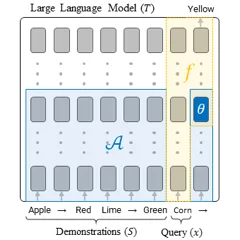
A language model distills the examples in its prompt into a single internal vector that represents the task they demonstrate, then answers new queries from that vector alone.
ML Research Engineer

I work at the intersection of ML research and engineering, drawn to the core problems on the way to general intelligence that is useful, efficient and safe.
I have worked in ML for seven years, in industry and in academia. Most recently, at AI21 Labs, I worked across both the infrastructure and the research side of LLM training: the efficiency of large-scale distributed training with reinforcement learning, and the full post-training experimentation process. I was also a core developer of the retrieval systems behind the company’s RAG offering. During my M.Sc. at Tel Aviv University I worked on the mechanistic interpretability of large language models. Earlier, in the IDF, I worked in computer vision, building deep-learning object detection systems.
I’m a graduate of the Talpiot program, with a B.Sc. in Physics and Computer Science from the Hebrew University.
Findings of EMNLP 2023
A language model distills the examples in its prompt into a single internal vector that represents the task they demonstrate, then answers new queries from that vector alone.
AI21 Labs technical blog, 2026
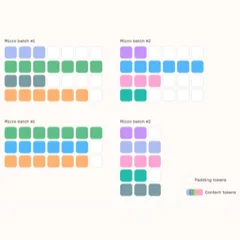
An alternative to architecture-specific solutions like sequence packing. Minimizing padding entirely outside the model works with any architecture, recovers almost all of the same speedup, and was used to train Jamba 2 efficiently.
arXiv preprint, 2025
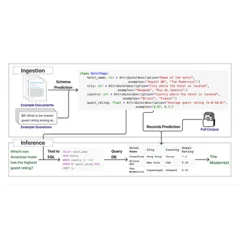
Standard retrieval breaks down on questions that have to aggregate over a whole corpus rather than a few passages. We pinpoint that failure and propose a first direction toward solving it.